Open plan offices bring a lot of perks to the modern workspace – they encourage collaboration, flexibility and scalability in the workspace. While this supports a business with fluctuating needs, they present unique acoustic challenges. In an open plan workspace, noise travels freely and bounces off hard surfaces – finding a quiet zone or private space can be nearly impossible.
Reports indicate that noisy environments in open-plan offices have been shown to increase stress and reduce productivity by up to 66%. It is clear that balancing acoustics in open-plan offices is not only beneficial to employees but can make a huge difference in business productivity. This is where acoustic zoning can be advantageous, as it supports open plan offices in becoming acoustically balanced without requiring a full office renovation.
With over 50 years of experience in design-driven commercial interior and public space solutions, Baresque has mastered the art of acoustic solutions – working closely with designers and architects to balance visual design with acoustic performance.
Why Acoustics Are Challenging in Open Plan
Sound Reflection and Reverberation
Hard materials such as glass, polished concrete and metal are the foundation of modern and contemporary design - but they come at an acoustic cost. Rather than absorbing sound, they bounce it back into the space, creating reverberation that builds throughout the day.
In open plan environments, this persistent layer of background noise accumulates across hard surfaces, making it increasingly difficult for people to focus, communicate and feel comfortable.
Noise, Distraction and Lack of Privacy
Without spatial boundaries, conversations, notifications and phone calls all blend into one another, creating a constant stream of noise. This leads to sound waves travelling freely across the open floor – reducing concentration and increasing stress levels. In open-plan office design, the goal is not to eliminate noise by adding dedicated video conferencing spaces or meeting rooms, but rather to control how it moves through the space. This is where acoustic zoning comes into play.

What Is Acoustic Zoning?
A Design Strategy for Managing Sound
Acoustic zoning is defined by separating open spaces according to the acoustic needs of the different sound levels and activities. Instead of taking the traditional approach of building permanent walls, acoustic zoning uses a combination of layout, material selection and architectural elements to create acoustically comfortable environments. Ideal for activity-based working models, acoustic zoning supports both collaboration and focus zones where needed.
Creating Spaces for Different Activities
Every space in an open-plan office has a different set of needs based on how the area is intended to be used. For meeting rooms and breakout spaces, acoustics need to absorb more sound, while in quiet zones, the surrounding acoustic solutions need to absorb the sound around them.
Design Strategies for Effective Acoustic Zoning
Plan Spaces Based on Activity
When deciding how to zone open plan workspaces, it is recommended to group areas according to the same intended use. High traffic areas and active collaboration spaces should be clustered together, while quiet, focus zones should be placed further away. Spatial sequencing, hierarchy and flow help guide how sound is experienced throughout an open plan office.
Use Acoustic Materials to Reduce Reverberation
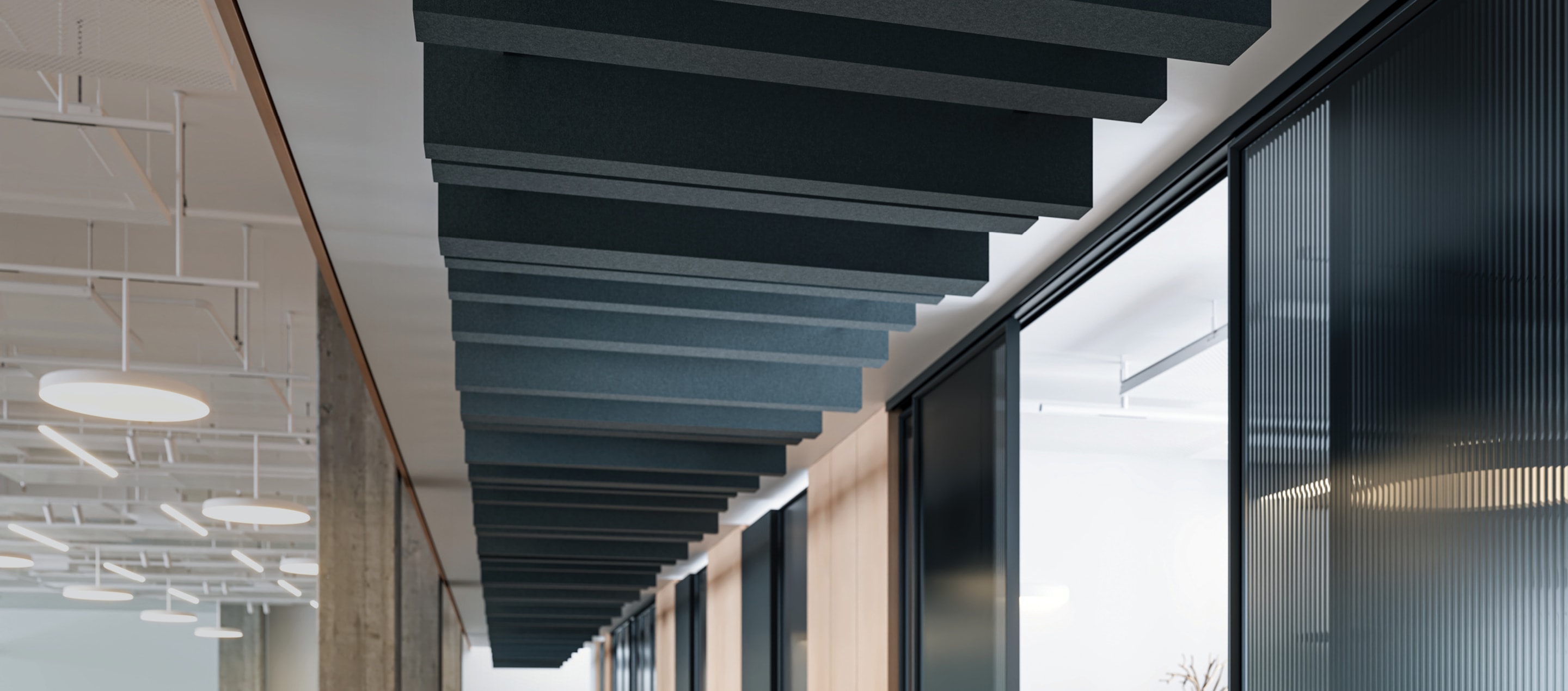
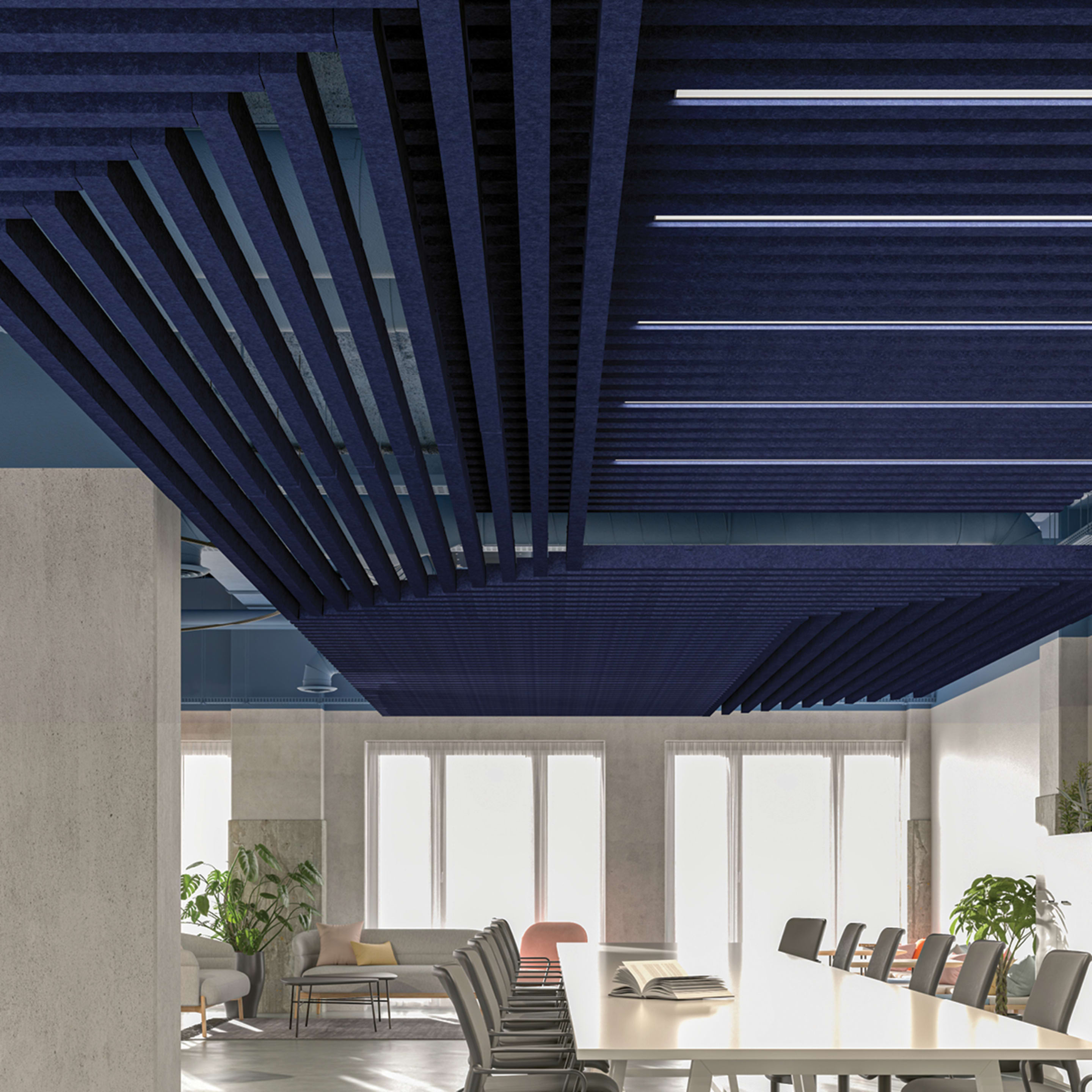
The type of materials used to acoustically tune an open space environment makes a big difference in controlling sound and reducing reverberation. Installing acoustic solutions such as acoustic panels, ceiling panels, baffles and acoustic screens all work to reduce noise and reverberation. In open-plan offices, ceiling panels are highly effective as they can be suspended over high-traffic areas to reduce reverberation and noise control.
Baresque’s collection of acoustic panels, acoustic baffles, acoustic tiles and acoustic ceiling clouds for office environments supports designers in creating visually interesting spaces while balancing the acoustics of open plan office design.
Define Zones with Furniture and Architectural Elements
Furniture and architectural elements such as high back seating, divider shelving, acoustic booths, or suspended elements can all shape how noise is contained and a space interpreted. These subtle features reinforce zoning without taking away the visual identity of a space.
Balancing Acoustics with Interior Design
Acoustic Materials as Design Features
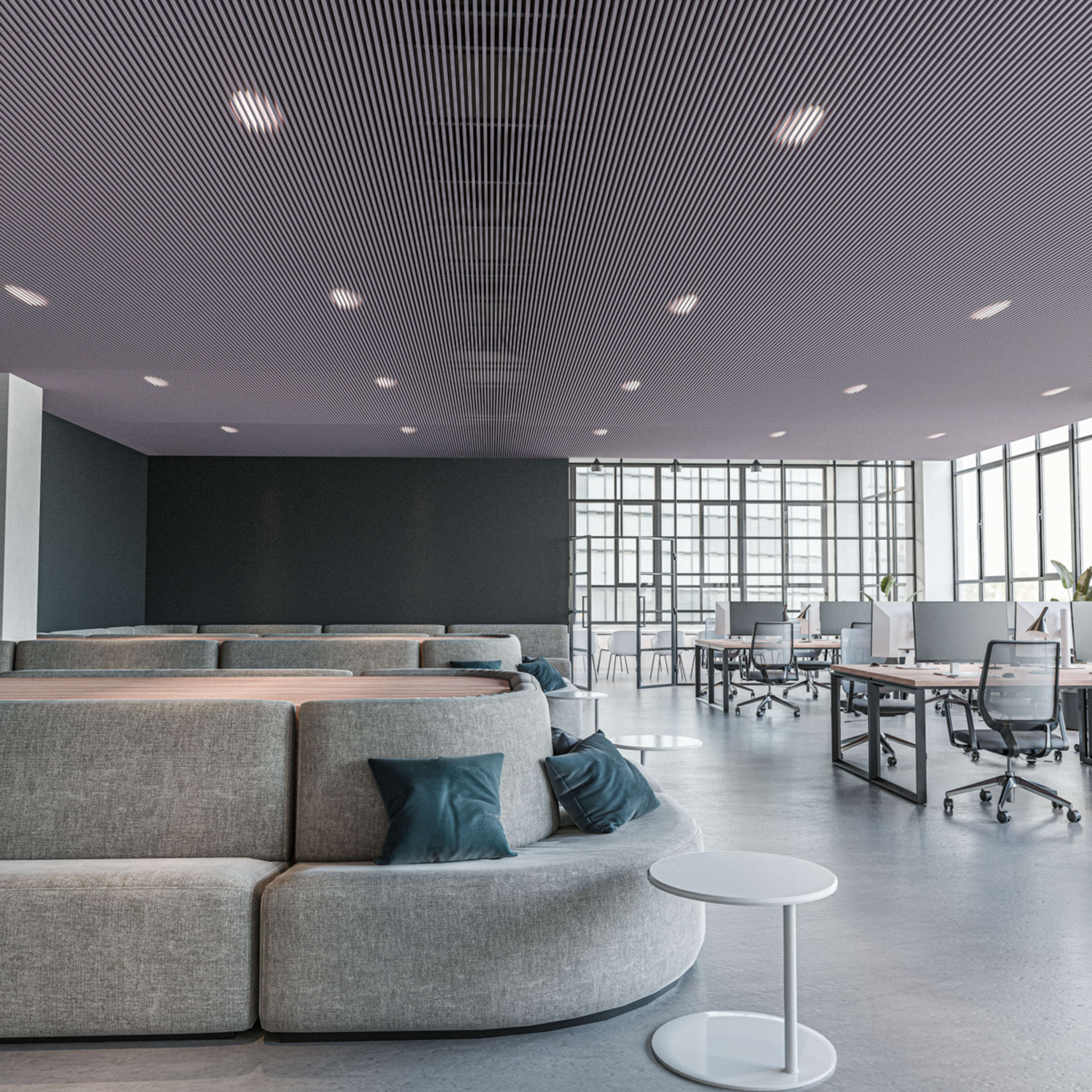
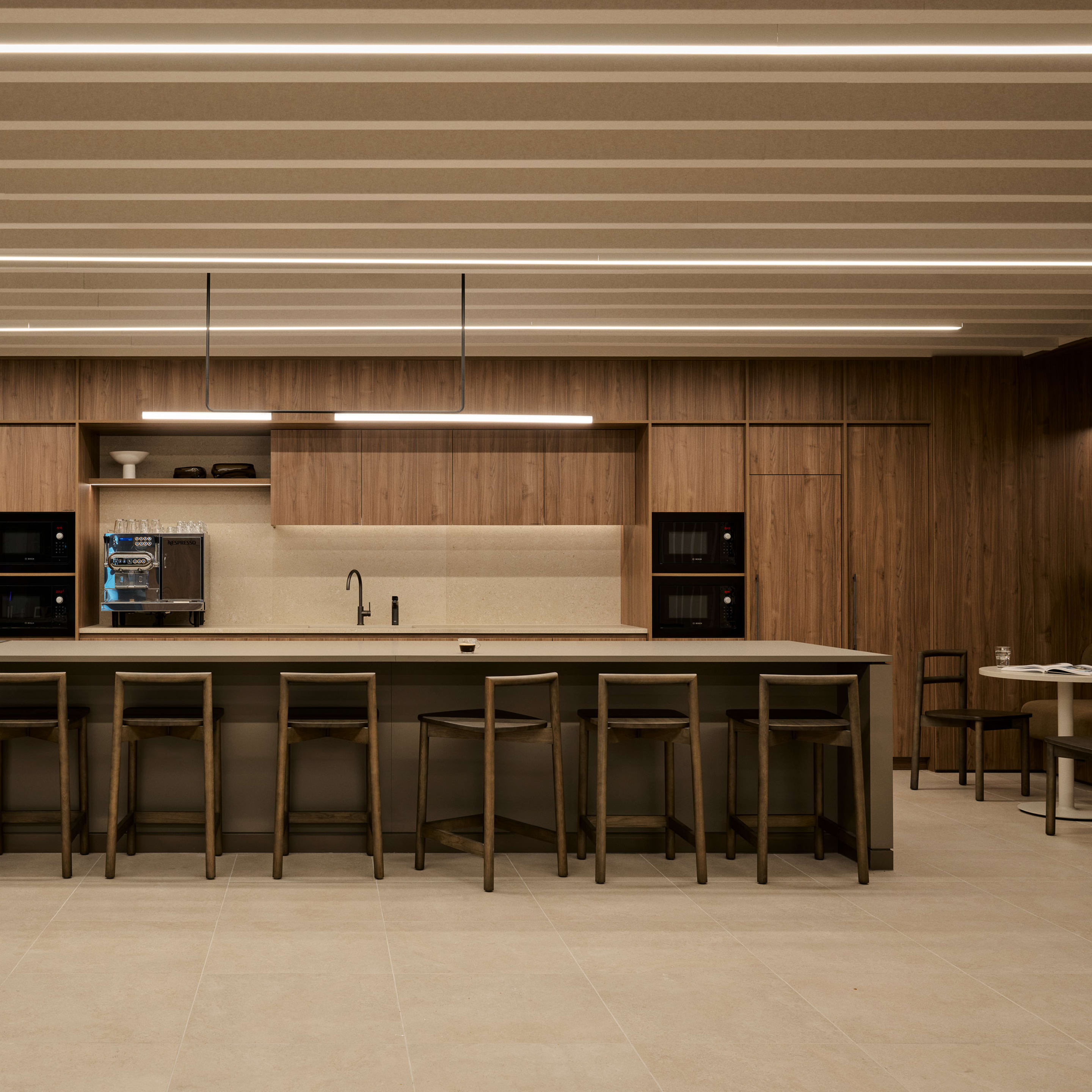
Acoustic solutions are no longer simply functional panels that designers and architects install to reach building requirements – they are integral parts of what makes open plan environments visually and acoustically appealing. From the range of colours, textures and finishes to material choices such as fabric wrapped panels, premium prints and laminated solutions like Enercee, acoustic solutions bring a design-led approach to sound control.
Projects such as Metrics Sydney and Australia Square Tower showcase how acoustic solutions can enhance the visual aesthetics of open-plan office design. With Baresque’s acoustic solutions, acoustic performance and aesthetics can be naturally incorporated into any open plan environment – creating cohesive spaces that feel as aesthetic as they are functional.
Designing Visually Distinct Zones
Materials selection, tone, texture and visual cues all signal transition between spaces – from quiet, focused areas to collaborative hubs. Fabric-covered walls can communicate a sense of softness and quiet, while colourful ceiling baffles and acoustic tiles can bring a boost of energy and rhythm to collaborative spaces. Together, these elements help define the purpose and character of each zone.
Designing Open Spaces That Sound as Good as They Look
Whilst open plan environments are great for collaboration, if they do not have the right acoustic considerations, they can become noisy and stressful environments to work in. Acoustic zoning supports designers and architects in creating distinct zones for focus and collaboration.
By integrating spatial planning with sound-absorbing materials and architectural features, designers can create acoustically balanced environments that are also visually cohesive. Baresque’s range of acoustic solutions has been developed with this intent, ensuring that spaces feel as acoustically comfortable as they do visually engaging.
Ready to take your open plan office design a step further? Explore Baresque’s acoustic solutions or get in touch with our team for more information.