The acoustics of a space are as important as the lighting and design interiors– it dictates how we think, feel and collaborate. When acoustics are an afterthought, even the most beautiful spaces fall short and become uncomfortable to be in as echoes multiply and speech becomes distorted. Choosing the right acoustic panels takes careful consideration of five principles: performance, materials, compliance, sustainability and design installation. With nearly 15 years of experience in designing acoustically balanced spaces, we will cover what every designer and architect should consider when selecting acoustic panels for commercial projects in Australia. From evaluating performance data to careful design considerations, we will guide you through what to look for in acoustic panels to ensure clarity and aesthetics are achieved.
Acoustic Performance: How to Read the Numbers
Understanding NRC (Noise Reduction Coefficient)
The Noise Reduction Coefficient (NRC) measures how well a material absorbs sound. Scaled between 0 and 1 - 0 representing no absorption and 1 indicating complete absorption - it reflects the material's average absorption across frequencies. When evaluating a product's sound absorption, it is best to look at the full absorption curve in addition to NRC, as two panels with the same NRC can perform differently across low, mid and high frequencies.
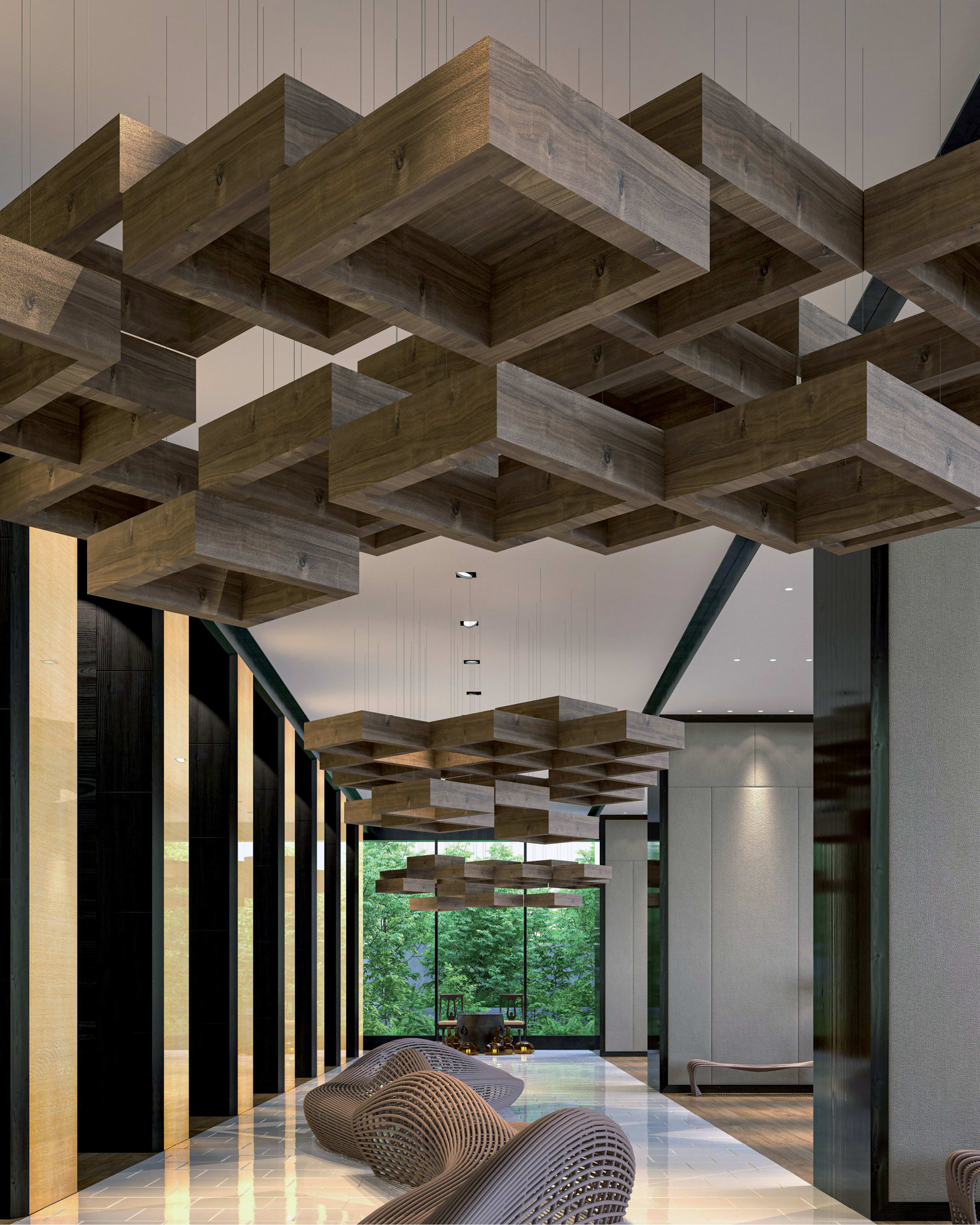
Some products can also achieve values greater than 1 at some frequencies. For example, Baresque’s Zintra Beams ceiling features are rated up to NRC 1.5, thanks to their geometry and exposed surface area, which allows them to absorb sound more effectively at higher frequencies, resulting in a coefficient greater than 1. This doesn’t mean “more than 100% absorption” across the board, but it highlights how smart design can deliver exceptional acoustic performance.
STC / Rw Ratings (When Blocking Noise Matters)
Sound Transmission Class (STC) or Rw ratings look at how effectively a barrier blocks sound from passing through. This is used when soundproofing between rooms, whereas NRC focuses on reverberation within a room. When designing the acoustics of a space, it is important to consider both measurements as they will determine how the acoustics are experienced within a space, as well as how sound is contained across rooms.
Thickness & Density for Low Frequencies
Panel thickness and material density affect bass absorption. With lower frequencies being more difficult to control, opt for thicker and denser panels. As a rule of thumb, using denser materials helps improve acoustic performance, while increasing the thickness can improve low-end absorption. For example, Zintra’s wall and ceiling acoustic panels offer a selection of densities and thicknesses to achieve balanced absorption across any space or frequencies.
Materials & Construction
Common Materials
Materials can greatly affect the performance, safety and sustainability of acoustic panels:
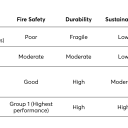
Foam: Lightweight and cost-effective, but has limited fire resistance and is less durable.
Fiberglass/ Mineral Wool: Typically has excellent broadband absorption, but raises health concerns and is difficult to recycle.
Wood/Metal composites: Add visual texture and warmth to a space, but need additional acoustic backing to be effective.
PET (Polyester): Widely used in Australia for its durability, low VOC, sustainability and ease of fabrication.
How Zintra PET Polyester Outperforms Other Materials:
Crafted from 60% post-consumer recycled PET bottles, 35% pre-consumer PET chips, and 5% bio-based PLA.
Has a Group 1 (highest performance) acoustic panel fire rating.
Offered at a minimum of 12mm, enhancing both acoustic performance and rigidity.
Low VOC Emissions.
Acoustic performance NRC up to 1.5 for ceiling fixtures.
Compliant for all commercial applications such as education, healthcare, hospitality and office environments.
Shapes, Sizes and Surface Patterns
The geometry of commercial acoustic panels dictates sound absorption in a space. For example, larger panels help capture wide coverage, whereas 3D forms with ridges or folds help to break up reflections. Baresque’s Zintra acoustic baffles and acoustic tiles with organic shapes help to evenly distribute sound and echoes within a space– delivering optimal performance without compromising on aesthetics.
Pros & Cons Comparison:



Fire, Safety & Compliance (Australian Standards)
NCC Fire Requirements & AS 5637.1 Testing
In Australia, under the National Construction Code (NCC), all walls and ceiling beam installations must comply with AS 5637.1 fire ratings. To determine the fire safety ratings, the entire system is graded into groups 1 to 4, with group 1 being the highest level of fire safety. It is important to conduct the test once all elements have been installed, as fabrics, laminates, or perforations can alter performance and the fire safety rating.
Sustainability & Indoor Air Quality
Recycled Content & PET Panels
Sustainability should be at the forefront of decision-making when selecting commercial acoustic panels. Zintra’s panels are made from 100% recyclable materials, helping to contribute to a circular future. With 60% Post-consumer recycled content from PET bottles, 35% Pre-consumer recycled content from PET chips, and 5% PLA polylactic acid, these acoustic panels support reduced waste and responsible sourcing.
VOC Emissions & Certifications
Acoustic panels with high VOC emissions harm people's well-being and are non-compliant with Australian green building frameworks, such as:
Green Star → Certification run by the Green Building Council of Australia (GBCA), widely used in AUS commercial interiors.
Global GreenTag → An Australian-based ecolabel and product certification program.
WELL Building Standard → Global standard (by IWBI) and commonly referenced for health and wellness outcomes in Australia.
Selecting those with low VOC, such as Zintra’s PET panels, for commercial spaces ensures that environmental targets are met and people's well-being is protected.


Aesthetics & Design Integration
Finishes & Customisation
The finishes and customisation of acoustic panels greatly affect how a space looks and feels. They add design aesthetics to a space and extend beyond acoustic performance.
Zintra’s range ensures design freedom is never at the cost of performance:
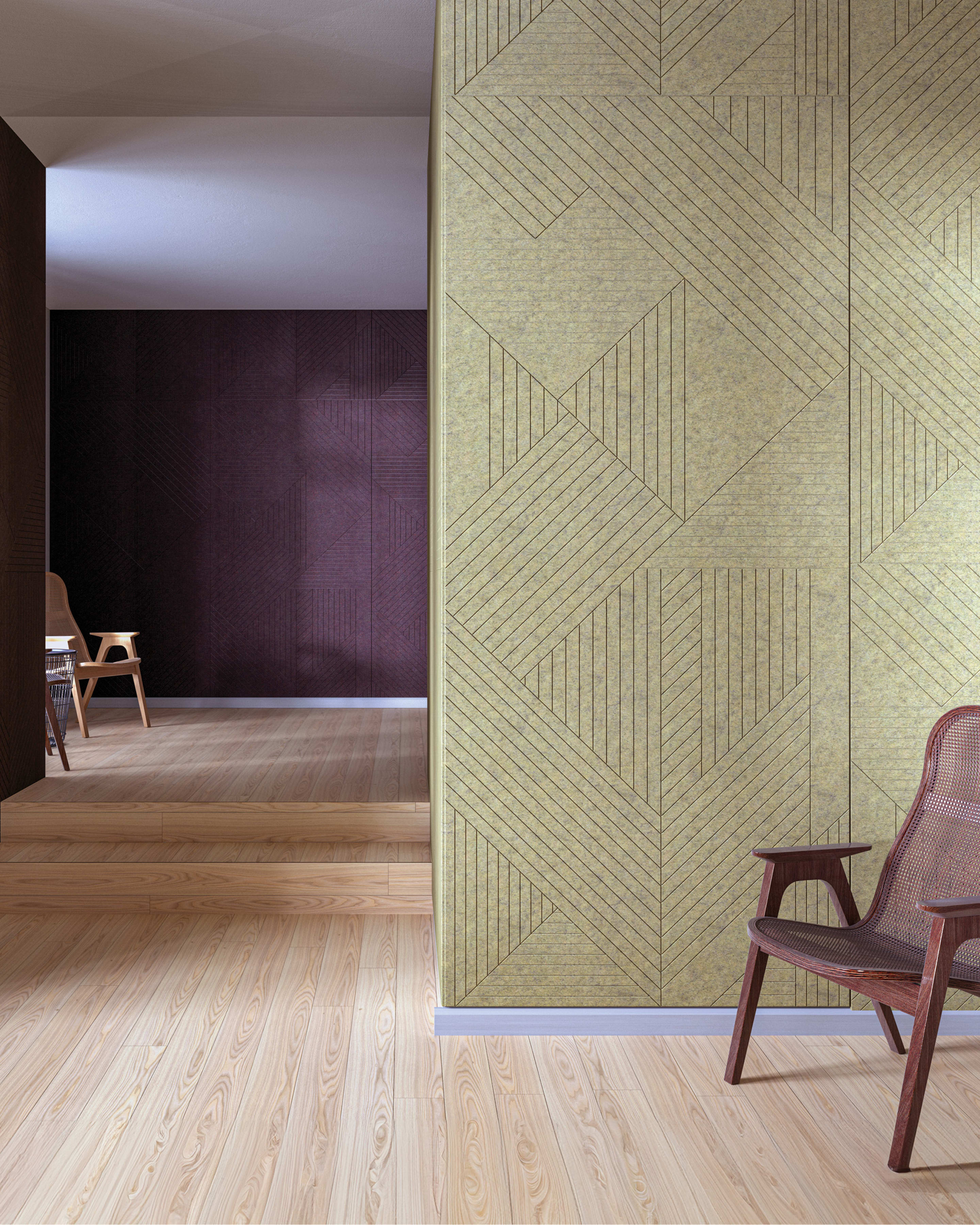
Zintra Digital Print: Select from custom colours or customised graphics through Zintra Digital Print selections.
Zintra Sticks: For timber slats or stick-type features, Zintra sticks offer linear forms to elevate any commercial space's aesthetics.
Zintra Premium Metals / Premium Wood: For coloured metals, architectural or timber finishes, Zintra's premium selection offers realistic, sleek designs and optimal sound performance.
Zintra Textile Prints: Select from a range of textile-inspired finishes and textures through Zintra Textile Prints.
Durability & Maintenance
Cleaning and maintaining acoustic panels is another key consideration. Zintra panels can be wiped-clean and are designed for easy maintenance.
For regular care and maintenance of Zintra’s PET panels:
Vacuum to remove dust.
Dab with a damp, clean cloth in warm water and mild detergent.
Rinse using clean water, then pat dry with a lint-free cloth.
For difficult stains, combine 10% bleach and 90% water to carefully work the stain. Always test in a small area first to ensure the solution isn’t too strong.
Design Features
When designing commercial spaces, it is important to pair acoustic comfort with visual aesthetics.
Tips for Café / Hospitality:
Use Zintra Clouds Stratus over seating zones or above the counter. This product is easy to clean and quick to install, ideal for hospitality spaces. These acoustic clouds bring visual drama and acoustic absorption by interrupting echoes from bouncing off ceilings and walls.
Tips for Healthcare:
For healthcare spaces, use Enercee Panel Wood Grain as it is durable, antimicrobial, and moisture and stain-resistant. For added acoustic comfort, pair with Zintra clouds to reduce overhead noise.
Installation & Coverage
Types of Installation
The location of where acoustic panels are placed and the size of the room affect the acoustic performance.
Zintra panels can be installed as:
Wall-mounted panels
Ceiling clouds
Acoustic Baffles
Suspended screens
Coverage Guidelines
How much coverage is needed is dependent on the placement and type of acoustic panels. Treating 15–25% of wall and ceiling surfaces can help balance acoustics in a space. If in doubt, follow the Principle of 3 as it highlights that using acoustics for three types of surfaces, such as walls, ceilings and vertical dividers, across a space can help even out sound acoustics and improve performance.
Placement Strategies
Another strategy is using mirror tests to identify reflection points from speakers or workstations. This is done by having someone move a handheld mirror along a nearby wall, and once you can see the sound source being reflected in the mirror, that determines the reflection point and the optimal location for an acoustic panel. For tall or reflective spaces where wall panels are not enough, adding ceiling acoustic panels can greatly reduce echoes and bring acoustic balance to a space. This helps achieve the most natural sound balance as it brings even distribution across a room.
In spaces with high ceilings or extensive hard surfaces, adding ceiling-mounted acoustic panels can help reduce echo and improve reverberation control. Zintra’s lightweight PET construction suits overhead applications and can be used to complement exposed surfaces such as HVAC systems, ducting or structural elements. This helps support acoustic balance while maintaining a cohesive design expression.

Conclusion: The Acoustic Panel Checklist
When determining the best acoustic panels for any commercial space, it is important to ask these five questions:
Performance: What is the NRC, acoustic curve and thickness or density required to effectively balance sound in the space?
Compliance: Are the materials used AS 5637.1 compliant, and what is the Group fire rating?
Sustainability: What percentage of materials used are recycled content, have low VOC, and are recognised by Australian compliance certificates?
Design: What finishes, customisation or durability of the acoustic panels will elevate the space?
Installation: Applying the Principle of 3, what level of coverage or placement strategy is needed for optimal performance?
By carefully considering these five principles, designers can ensure commercial spaces are transformed into sound-balanced havens of calm and clarity.
Ready to Design with Sound Balance in Mind?
Designing a space and unsure about the acoustic panelling? From sculptural acoustic clouds and acoustic baffles to wall-mounted acoustic panels, Baresques Zintra Acoustic range combines sustainability, performance and compliance with design freedom.
Explore the full range or speak to one of our experts to bring balance and clarity to your next commercial project.